If you’re applying to medical school, a residency program, or any job, you’ll probably hear the terms CV and resume. They sound similar, but they serve different purposes. Let’s break down what each one is, when you should use it, and how to put together a version that shows you in the best light.
Key Learning Outcomes
- A CV is a detailed academic record; a resume is a brief job‑focused summary.
- Use a CV for academic, research, or medical applications and a resume for most job openings.
- Tailor each document’s sections, length, and style to the audience for the best impact.
What Is a Curriculum Vitae (CV)?
A curriculum vitae, often called a CV, is a comprehensive record of your academic and professional life. It includes everything from your education, research projects, publications, presentations, teaching experience, awards, and even professional memberships. Because it aims to cover every relevant detail, a CV can be several pages long. In medicine and academia, a CV is the standard way to show the depth of your training and scholarly work.
What Is a Resume?
A resume is a short, targeted document that highlights the skills and experiences most relevant to a specific job. Most resumes are one to two pages. They focus on work history, key achievements, and the abilities that match the job description. Employers use resumes to quickly see if you have the right fit for the role they are hiring for.
Key Structural Differences
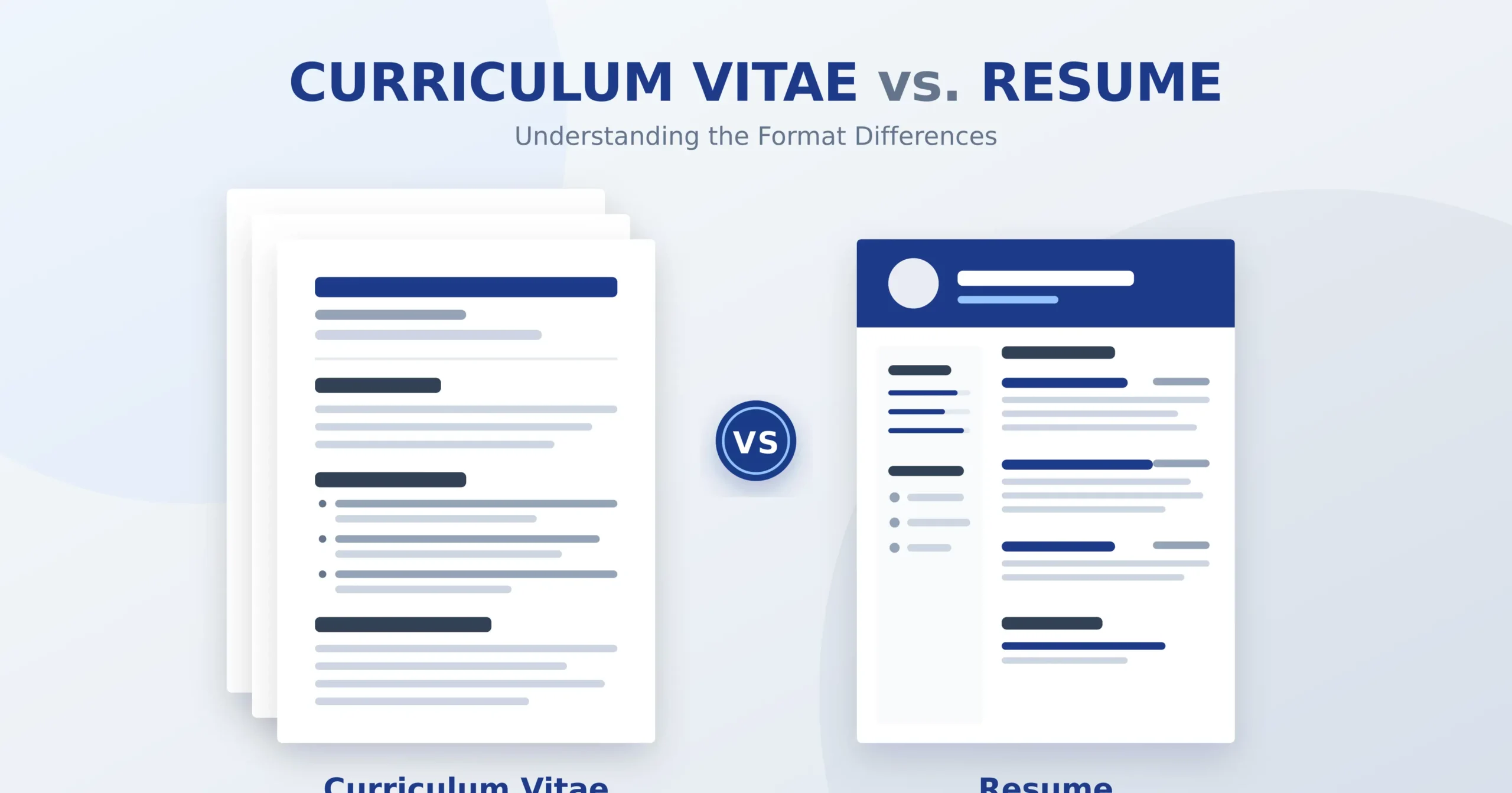
Curriculum Vitae vs. Resume
Simple guide to the key differences
| Difference | Curriculum Vitae (CV) | Resume |
|---|---|---|
| Length | No page limit Very detailed. Usually 2 to 10+ pages based on your experience. | 1 to 2 pages Very short. Made for a quick read by hiring managers. |
| Best For | Academic & Medical Used for teaching, research, and science jobs. | General Jobs Used for most regular jobs in business and tech. |
| Content | Full History Shows all your education, research, writing, and awards. | Top Highlights Shows your best skills, work history, and big wins. |
| Editing | Rarely Changes You just add new things to the list as they happen. | Changes Often You must edit it for each job to match what the company wants. |
| Design | Simple List Sorted by time. Focuses on facts, not flashy design. | Flexible & Clean Uses bullet points and spaces to look good and be easy to read. |
| Location | Global Use In the US, it is just for academic jobs. In Europe, “CV” means a regular resume. | North America The main document used for most jobs in the US and Canada. |
Both documents start with your name and contact information, but after that the layout changes a lot. A CV typically follows this order: education, research experience, publications, presentations, teaching, clinical rotations, awards, and professional affiliations. A resume, on the other hand, usually lists work experience first, then education, and may include a short skills section or a brief summary at the top.
When to Use a CV
Use a CV when you are applying for:
- Medical school or residency programs
- Academic faculty positions
- Research grants or fellowships
- International job markets that expect a full academic record
In these settings, reviewers expect to see a detailed account of your scholarly activities. They want to know how many papers you have written, what conferences you have spoken at, and the depth of your clinical training.
When to Use a Resume
Choose a resume for most non‑academic jobs, such as:
- Clinical positions in hospitals that focus on patient care
- Administrative or management roles
- Internships, volunteer work, or short‑term contracts
Employers in these areas usually have limited time to read each application, so a concise, achievement‑focused resume works best.
How to Organize Your CV
Start with a clear heading that includes your full name, phone number, email, and a professional link (like a LinkedIn profile). Then follow the standard sections in the order mentioned earlier. Use consistent formatting—same font, size, and bullet style throughout. For each entry, include dates, titles, and a brief description of your role or contribution.
If you need step‑by‑step help, check out this Step‑by‑Step Guide to Writing a Professional Curriculum Vitae. It walks you through each section and shows examples that fit medical and research fields.
How to Build an Effective Resume
Begin with a short summary that tells the reader who you are and what you bring to the table. Follow with a work experience section where each job entry includes a few bullet points that show measurable results—like “increased patient intake efficiency by 15%.” Add a skills box if you have technical abilities that match the job posting, such as electronic health record (EHR) systems or data analysis tools.
Even if you’re not applying for a medical role, the same principles apply. For example, a virtual assistant might highlight organization, communication, and software skills. A quick read on Essential Skills You Need to Succeed as a Virtual Assistant gives a good idea of how to frame those abilities in a resume.
Common Mistakes to Avoid
One frequent error is using the wrong document for the opportunity. Submitting a long CV for a fast‑paced corporate job can overwhelm the hiring manager. Likewise, sending a short resume for an academic fellowship can make you look under‑qualified.
Another mistake is inconsistent formatting. Mixing fonts, bullet styles, or date formats makes the document look sloppy. Proofread carefully and ask a friend or mentor to review it before you send it out.
Real‑World Example: Applying to a Residency
Imagine you are applying for an internal medicine residency. Your CV would start with your medical school details, followed by clinical rotations, research projects, and any publications. You would list each rotation with the hospital name, dates, and a brief note on the skills you gained, such as “managed acute cardiac cases under supervision.”
Your resume for the same application would be much shorter. It might include a summary like “Recent medical graduate with strong clinical and research background,” a concise list of the most relevant rotations, and a brief skills section highlighting procedures you are comfortable with.
Final Thoughts
Choosing between a CV and a resume isn’t about which one looks nicer; it’s about matching the document to the audience’s expectations. A CV tells a full story of your academic journey, while a resume gives a snapshot of your job‑ready skills. By understanding the differences, organizing the sections thoughtfully, and avoiding common pitfalls, you can create a document that opens doors—whether you’re aiming for a residency spot or a new career path.