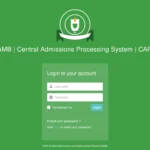

Defining the JAMB Central Admissions Processing System
The Joint Admissions and Matriculation Board established the Central Admissions Processing System to streamline tertiary education admissions across Nigeria. Introduced to ensure transparency and credibility, the platform acts as the central clearinghouse where universities, polytechnics, and colleges of education upload their successful candidates.
When candidates log into their portal profiles, they often panic upon seeing a “Not Admitted” status displayed prominently across their dashboard. However, understanding how the system functions will help alleviate unnecessary stress during the admission cycle.
Key Learning Outcomes
- Not Admitted is the default initial status on JAMB CAPS and does not indicate an automatic rejection from your chosen institution.
- Unuploaded O’Level results and institutional quota limits are the most common reasons candidates experience status delays.
- Candidates must regularly monitor the Transfer Approval tab and JAMB Marketplace while avoiding unverified third-party scams.
It is crucial to recognize that “Not Admitted” serves as the standard baseline status for every candidate at the start of the admission cycle. This initial text simply indicates that your institution of choice has not yet submitted its official list or processed your application file. Until your school publishes its candidate batches, the portal will retain this default placeholder regardless of your Unified Tertiary Matriculation Examination score. Therefore, seeing this message early in the admission exercise should not be interpreted as a final denial.

Primary Reasons Your Status Remains Not Admitted
The most frequent cause for an unchanged status is an incomplete academic profile, specifically missing Secondary School Certificate Examination results. Candidates who registered using awaiting results must upload their verified Senior School Certificate Examination grades to an accredited center. Without confirmed O’Level records in the central database, higher institutions cannot process admission recommendations under current regulatory guidelines. Ensuring your academic records are completely uploaded is the single most important maintenance step you can take.
Institutional quotas and departmental cut-off marks also play a substantial role in delayed status updates across tertiary institutions. Admissions officers process high-performing applicants first before moving down through merit, catchment area, and educationally less developed state lists. Furthermore, tertiary institutions upload candidate recommendations in gradual batches rather than all at once, meaning your approval notice may appear during later release rounds. Patience is required while institutions carefully evaluate thousands of competing applicant files.
Step-by-Step Actions to Resolve Admission Delays
Candidates concerned about their application progress should first verify that their O’Level results appear correctly within their profile dashboard. You can confirm this detail by accessing your profile, navigating to the O’Level section, and confirming that all subject grades match your official physical certificates. If your subjects are missing, visit an official Computer Based Test center immediately to upload them properly. Correcting transcript errors early prevents your application from getting skipped during recommendation rounds.
Secondly, candidates must routinely monitor auxiliary features such as the Transfer Approval tab and the JAMB Marketplace. If a university cannot offer you a spot in your primary course, they may offer a secondary course through the transfer portal that requires your formal consent. Once an offer appears on your dashboard, you can follow our Step-by-Step Guide to Accepting or Rejecting Admission Offers on JAMB CAPS to finalize your acceptance status. Active monitoring ensures you never miss critical admission deadlines set by your institution.
Strategic Next Steps and Alternative Academic Options
If your primary choice institution completes its admission exercise without updating your status, you should evaluate secondary admission routes. Utilizing the JAMB change of course or institution feature allows candidates to transfer their score to institutions that still have available quotas. Candidates must also remain vigilant against fraudulent individuals claiming they can manually alter status entries on the portal in exchange for payment. Official admissions are strictly managed through authorized institutional channels and automated system approvals.
While navigating local admissions, prospective students should also explore alternative tertiary education funding and global learning opportunities. High-achieving candidates looking to pursue higher education abroad can explore opportunities such as the Fully Funded KAAD Scholarship in Germany 2026 for Nigerians. Expanding your academic horizons ensures that you maintain viable pathways toward reaching your long-term educational objectives regardless of local entry limitations.